Industrial manipulators that make heavy feel weightless

Ergonomic lifting starts with the right manipulator

Do your operators lift the same heavy load dozens of times per shift? Then you know what it costs. Backs are tired by noon. The pace drops in the afternoon. Good people call in sick. And production can’t speed up while your team carries the weight.


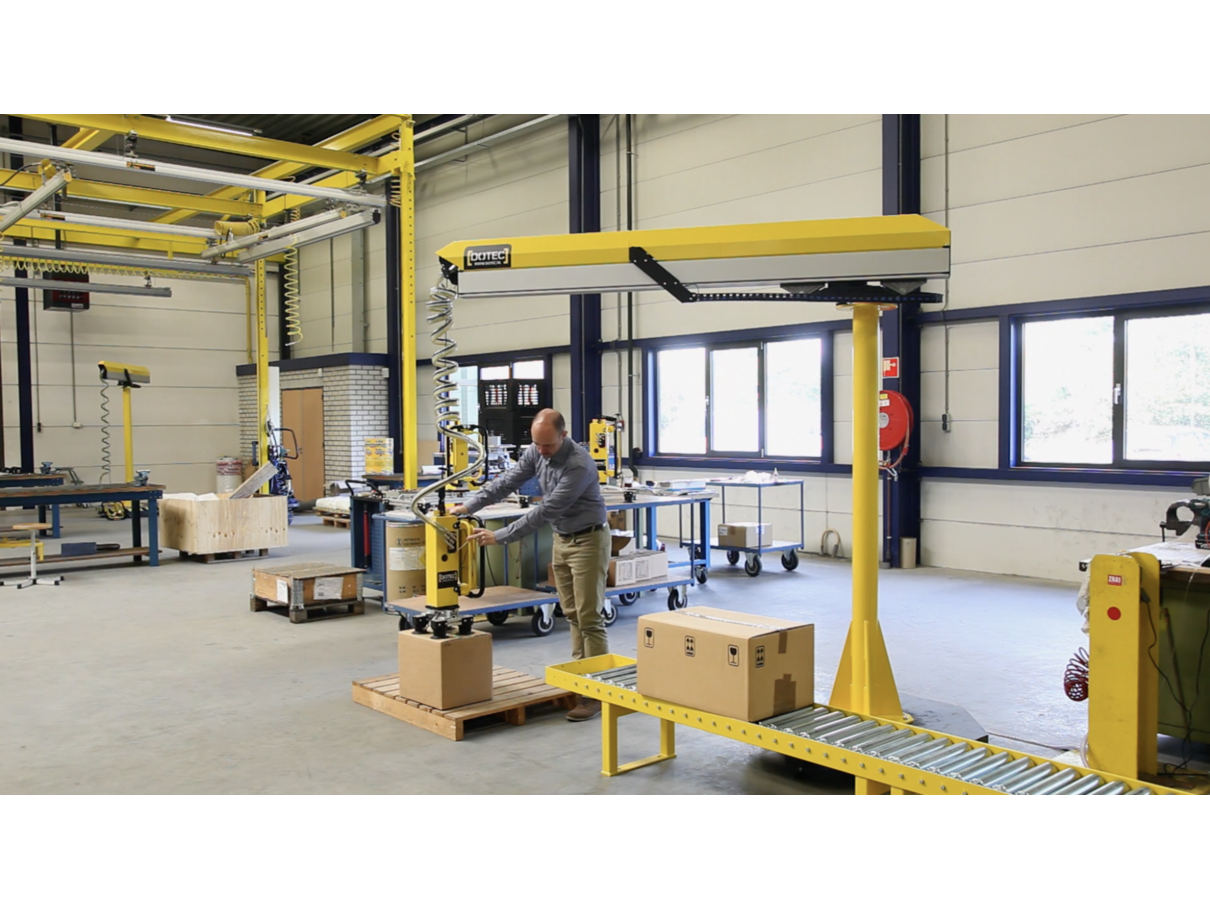
So what takes the weight off their shoulders? An industrial manipulator does. It lifts, tilts and positions the load. Your operator simply guides it with one finger, and the load feels weightless.


But will it fit your product, your line and your floor space? Yes, because we build every manipulator around them. Rolls, kegs, glass or sacks: we match the gripper, the pneumatic drive and the rail or jib crane to your process. Below, you’ll discover which combination suits your load.
What is an industrial manipulator?

What is an industrial manipulator?

An industrial manipulator is a lifting device that carries the weight of a load while an operator guides every movement. It grips, lifts, tilts, rotates and positions products with precision, from pallet to machine. Your operator steers. The manipulator does the heavy work.


So how is that different from a robot? A robot works on its own and follows programmed routes. A manipulator works with your people. Your operator keeps control and judgement. The machine adds the strength. And compared to a hoist? A hoist lifts straight up and lets the load swing. A manipulator holds the load firmly and places it exactly where you want it.


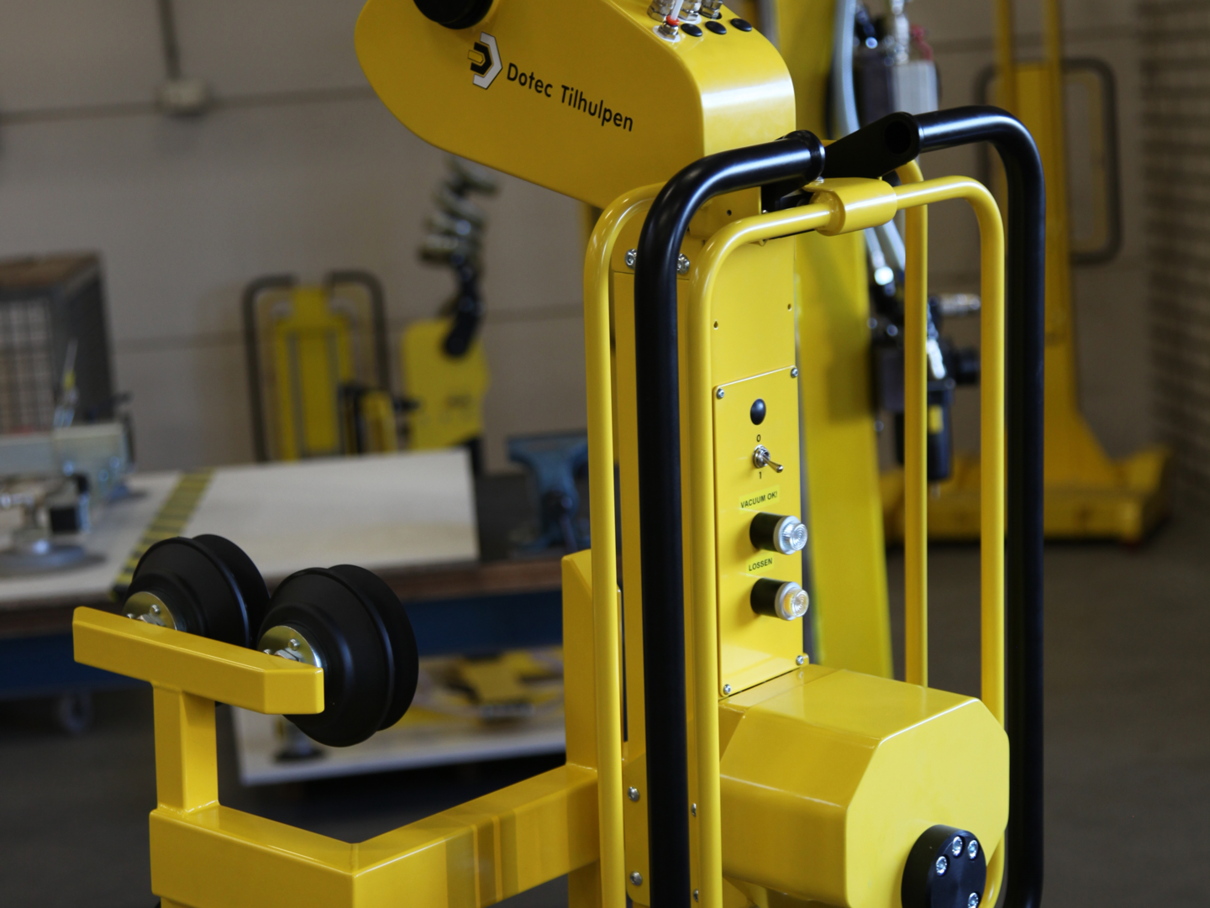
With a Dotec manipulator, one finger on the Ergohandle controls direction and speed. Press lightly for slow, precise moves. Press further to go faster. Most operators master it within ten minutes. Safety is built in, too: the handler only releases a product once it rests securely. Which gripper does your product need? That’s your next choice.

When should you choose an industrial manipulator?

When should you choose an industrial manipulator?

Not every lift needs a manipulator. But some signs are hard to ignore. Do your operators lift the same load dozens of times per shift? Then the strain adds up fast. Does the load exceed safe lifting limits? Even under ideal conditions, NIOSH recommends no more than 23 kg (51 lb). Maybe the product must be tilted, rotated or placed with precision. Or one lift simply takes two people. And if back complaints and absence keep coming back, your floor is sending you a clear message.


So when is a manipulator not the answer? If your process runs fully automated without variation, a robot may suit you better. If you only lift occasionally, a simple hoist can be enough. Everywhere in between, a manipulator gives you the best of both: human control and machine strength. So which gripper does your product need?

Industrial manipulators for every product you handle

Industrial manipulators for every product you handle

What do you lift all day? Rolls of film or paper? Boxes, crates or kegs? Glass, drums or sacks? Every product asks for a different grip. That’s why we don’t sell one standard machine. We build the manipulator around your product.


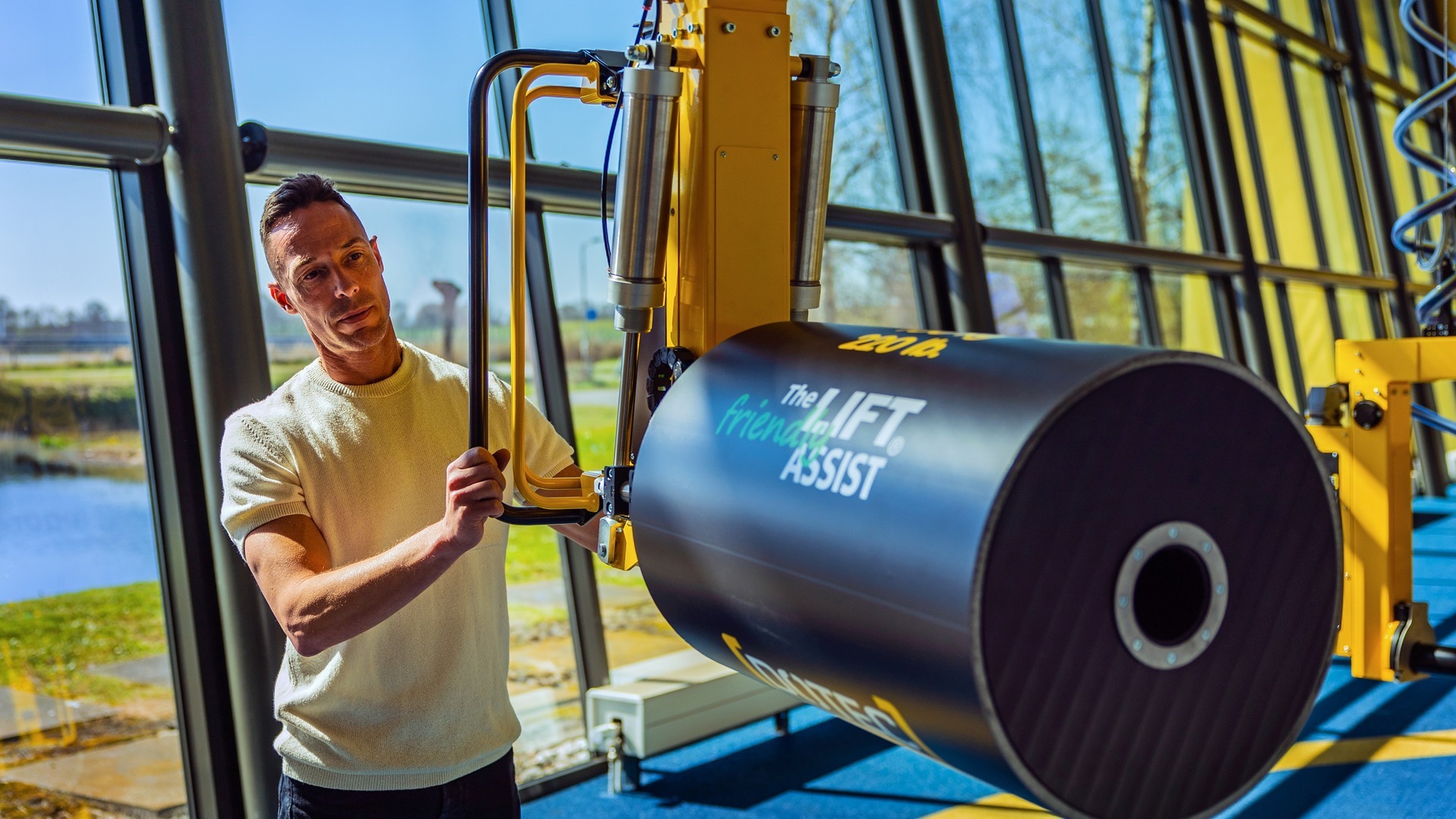
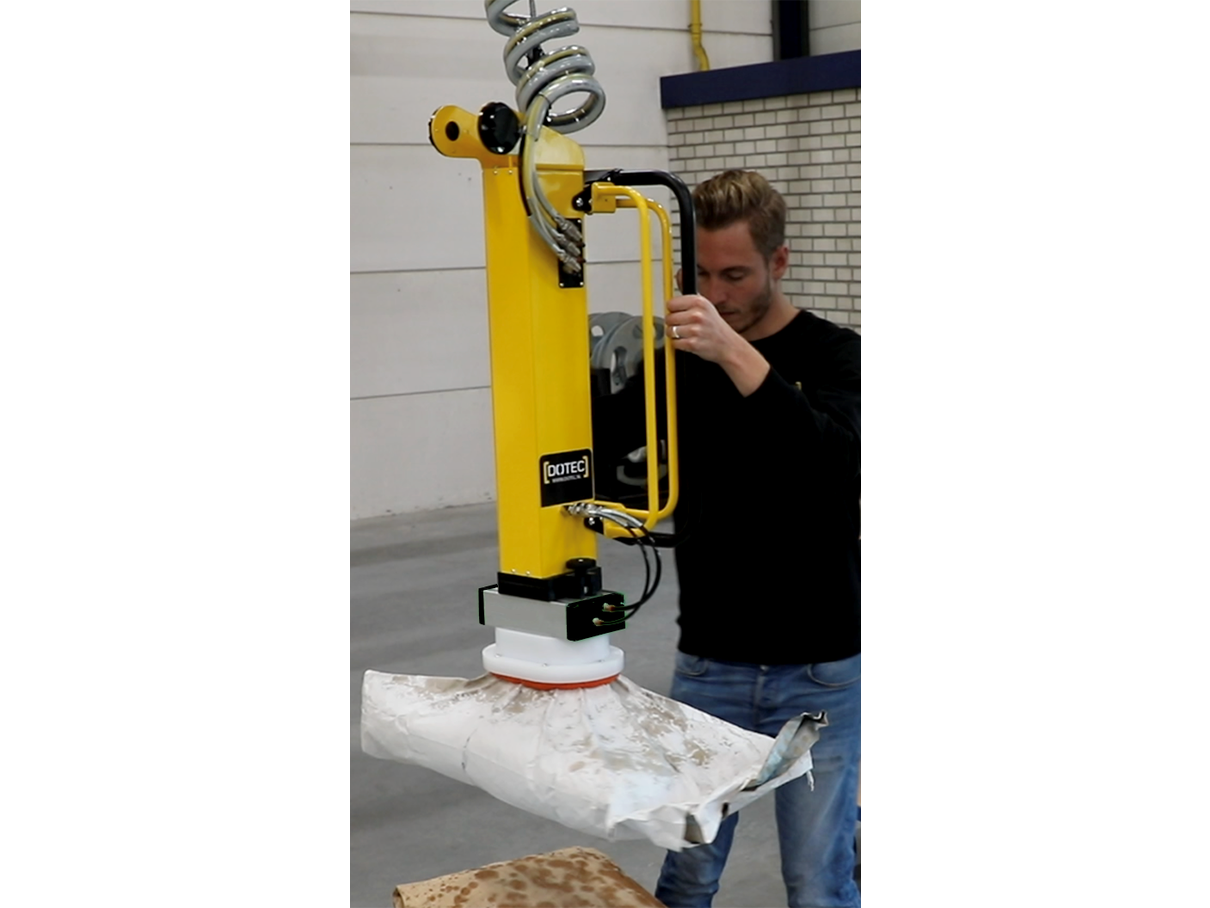
All our handlers share one proven base. On top of that, we add the gripper and modifications your process needs. A core gripper lifts a roll without touching its outer layers. Clamps, vacuum or magnets take care of other products. The result feels as if it was made for your floor, because it was.


That approach has proven itself for over 40 years. Dotec manipulators run on production floors worldwide, from packaging and printing plants to beverage and glass production. Many of them run 24/7. Trioworld Harlingen started with one LiftAssist in 2000 and now uses eight. Curious how others solved their lifting challenge? Read their stories in our customer experiences.

How a pneumatic manipulator works

How a pneumatic manipulator works

How does a pneumatic manipulator carry the weight? With compressed air. For lighter loads, an air balancer does the lifting. Heavier products get a rigid arm with integrated air cylinders. When the movement stops, the load rests on a cushion of air. That elastic movement is what sets an air balancer apart from a hoist. Digitally controlled valves regulate pressure and flow. We call this digitized pneumatics. Settings are adjusted in software, without touching the hardware. Updates and troubleshooting can even happen remotely.

What an industrial manipulator changes on your floor

What happens when the weight is gone? Your operators finish their shift with energy left. One person can handle the lift that used to take two. The pace stays steady, from the first hour to the last. Less strain means fewer back complaints and fewer gaps in the schedule. And because strength no longer matters, you can hire from a wider pool of talent. Experienced people stay longer, and so does their knowledge. That is where safety and efficiency meet.

The system

The system

Dotec LiftAssists have very specific characteristics that are based on ease of operation, speed of work and ergonomics. 


Infrastructure

Infrastructure

Rail system or jib crane? Your floor layout decides. Limited headroom or space usually means a jib crane. Aluminium rails carry up to 700 kg.

Why Dotec

Why Dotec

Dotec is your worldwide total supplier for customized handling solutions. Tell us your handling problem. We’ll solve it to fit your process.


Frequently asked questions
Can an industrial manipulator be customised to my product?

Yes. All Dotec handlers share one proven base. On top of that, Dotec adds the gripper and modifications your process requires: a core gripper for rolls, or clamps, vacuum or magnets for other products. The result is a manipulator built around your product, line and floor.

How much can a roll manipulator lift and can it be tailored to our rolls?

Dotec roll handlers lift rolls up to 500 kg (1,100 lb). Every Dotec solution is custom-fit, because no two production lines are the same. Dotec looks at your spindle height, roll weight, and floor layout, then matches the gripper type and infrastructure to it. The equipment adapts to your material and your line, not the other way around.

How does roll handling equipment prevent damage to the rolls during handling?

By gripping each roll correctly and positioning it precisely. This avoids crushed edges, stretched film, and the "telescoping" effect where a paper roll's inner layers slide out. Material-specific grippers protect the surface, and controlled tilting keeps the roll intact, so you get less waste and more consistent roll changes.

Can one person change a heavy roll alone instead of needing two?

Yes. A job that once took two people can be done safely by one operator. The handler carries the load and positions the roll precisely, so changes are faster and lower-risk. That frees a second worker and cuts downtime at slitter rewinders and printing presses.

Contact us for personal advice

Contact us for personal advice

Wouter Verhagen, our sales manager, would be happy to provide you with detailed information about our capabilities and the various handling devices, and how we can meet your individual needs.